
They slink silently, almost invisible, until one day an organized procession crosses your work surface. Ants never arrive by chance. Their discreet intrusion is actually a coded message about the state of your home, something far deeper than a simple search for food.
At first glance, a single ant seems harmless. But when they become regular visitors, it’s a sign that something unseen is going on in your home. From a simple forgotten crumb to a more serious structural problem, these little explorers can reveal a lot about your domestic environment. Let’s decipher together what they’re trying to tell you.
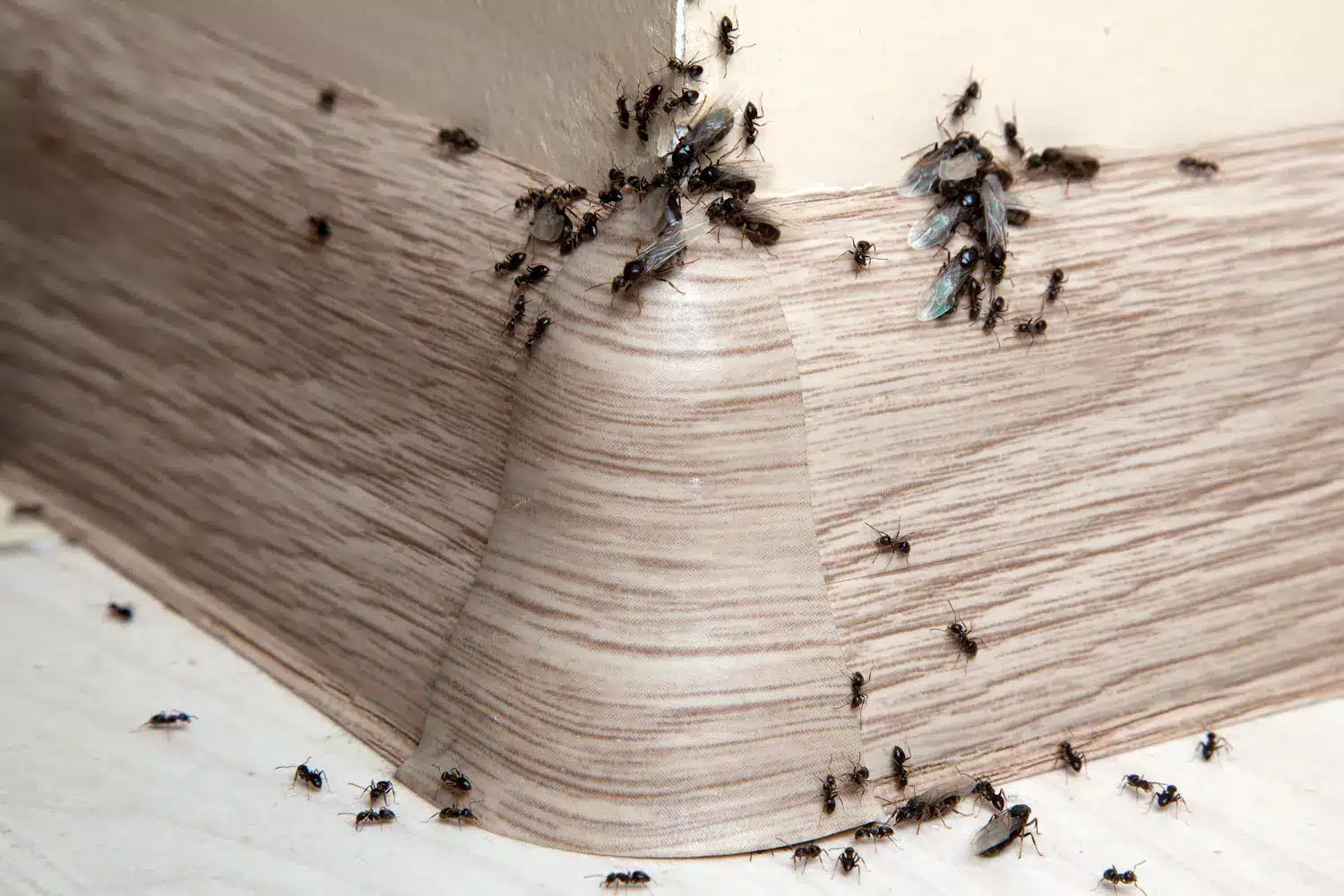
The real reasons for their intrusion into your home
The most obvious motivation is food. A trace of syrup on the counter or a crumb of breadcrumbs on the floor represents a veritable feast for an ant colony. Endowed with an exceptional sense of smell, they locate sources of sugar and fat in record time. But their arrival isn’t solely explained by gluttony. External conditions play a key role: prolonged drought or oppressive heat drives them to seek a more temperate and humid refuge, and your home then becomes an ideal oasis. A simple crack in the mortar, an aging window seal, or a leaking pipe is enough to offer them a royal passage inside.

The clues hidden behind their passage
Beyond simply keeping things clean, ants sometimes act as natural detectives. They point out problems you might have overlooked:
Excess moisture: Carpenter ants have a weakness for waterlogged wood. Their appearance is often the first warning sign of water infiltration or abnormal condensation in your walls or ceilings.
Invisible food residue: They highlight crumbs and spills you don’t see, especially behind the refrigerator or under kitchen cabinets.
An unbalanced garden: If lizards, spiders, or birds are scarce around your property, ants take advantage of the situation to proliferate without encountering natural predators.
What are the real risks to your home?
While most species are harmless to humans, some can cause very real damage:
Carpenter ants burrow into wood, which can weaken antique furniture or, in the most serious cases, compromise the structural integrity of a building. Other species, by moving across contaminated surfaces, can carry germs and contaminate your food or work surfaces. Finally, in the event of a large infestation, they will readily enter electrical outlets or household appliances, sometimes causing short circuits.

Gentle solutions to keep them away
There’s no need to immediately resort to harsh insecticides. Here are some proven natural methods:
White vinegar: mixed with water, it neutralizes the pheromones they leave behind, completely disorienting them. Lemon or coffee grounds: these powerful scents disrupt their sense of direction. Baking soda mixed with sugar: an unbeatable trap that attracts them and then eliminates them without harming the environment. Cinnamon or bay leaves: placed on thresholds and in cracks, they act as a natural olfactory barrier. In addition, impeccable hygiene remains your best ally: airtight trash cans, work surfaces cleaned every evening, and food stored in sealed containers.
When should we sound the alarm?
If, after applying these tips, the ants persist and return in large numbers, it’s time to call a professional pest control service. A precise diagnosis will identify the exact source of the infestation and, more importantly, reveal hidden problems such as a water leak or rotting wood that require prompt attention.
Key takeaways
An ant infestation is never insignificant. It’s a subtle warning sign, an invitation to inspect your home with fresh eyes. The next time you encounter one of these tireless workers, don’t instinctively squash it. Take the time to observe, understand the message, and then act thoughtfully and sustainably.


0 Comments:
Post a Comment